Recently, conversations with friends who do not eat dairy confronted me with the following question: is vlaai (pronounce “vly” as in fly) made without milk and butter still vlaai? My heart sank at the idea. The smell of butter gently melting in the pan with some milk. Then added to the flour and yeast, lukewarm. The dough kneading in my hands like warm velvet smelling like the one and only ultimate food in the world. Without milk and butter it would just be… dough.
Limburgish vlaai (not to be confused with vlaai from Aalst or Lier in other parts of Belgium) are baked in the area covering both Dutch and Belgian provinces of Limburg, but also in the Belgian Ardennes and German Eifel, including cities as Maastricht (“vlaai”), Aachen (“Fladen”), Liège (“tartes”) and Hasselt (“vlaai”).
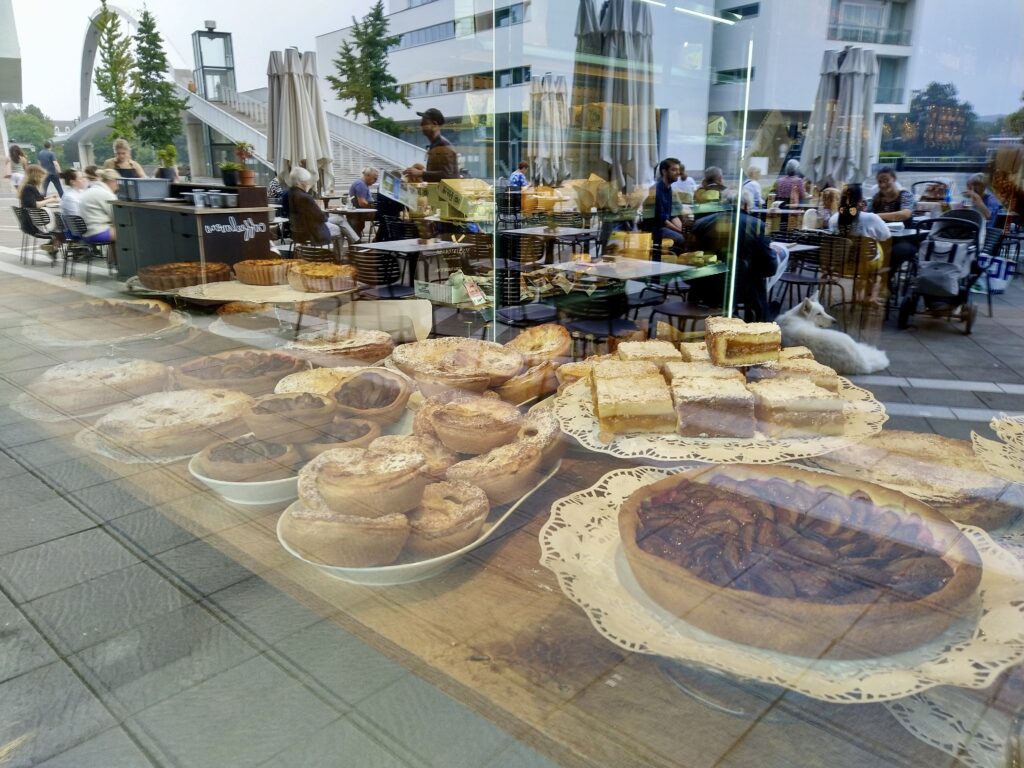
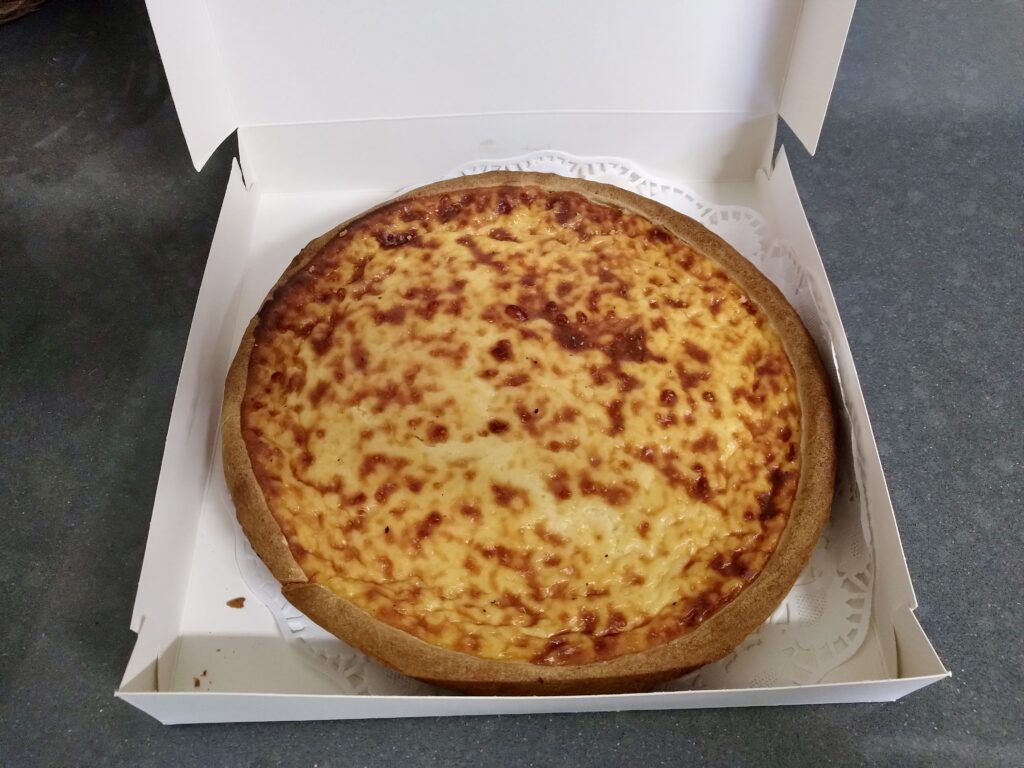
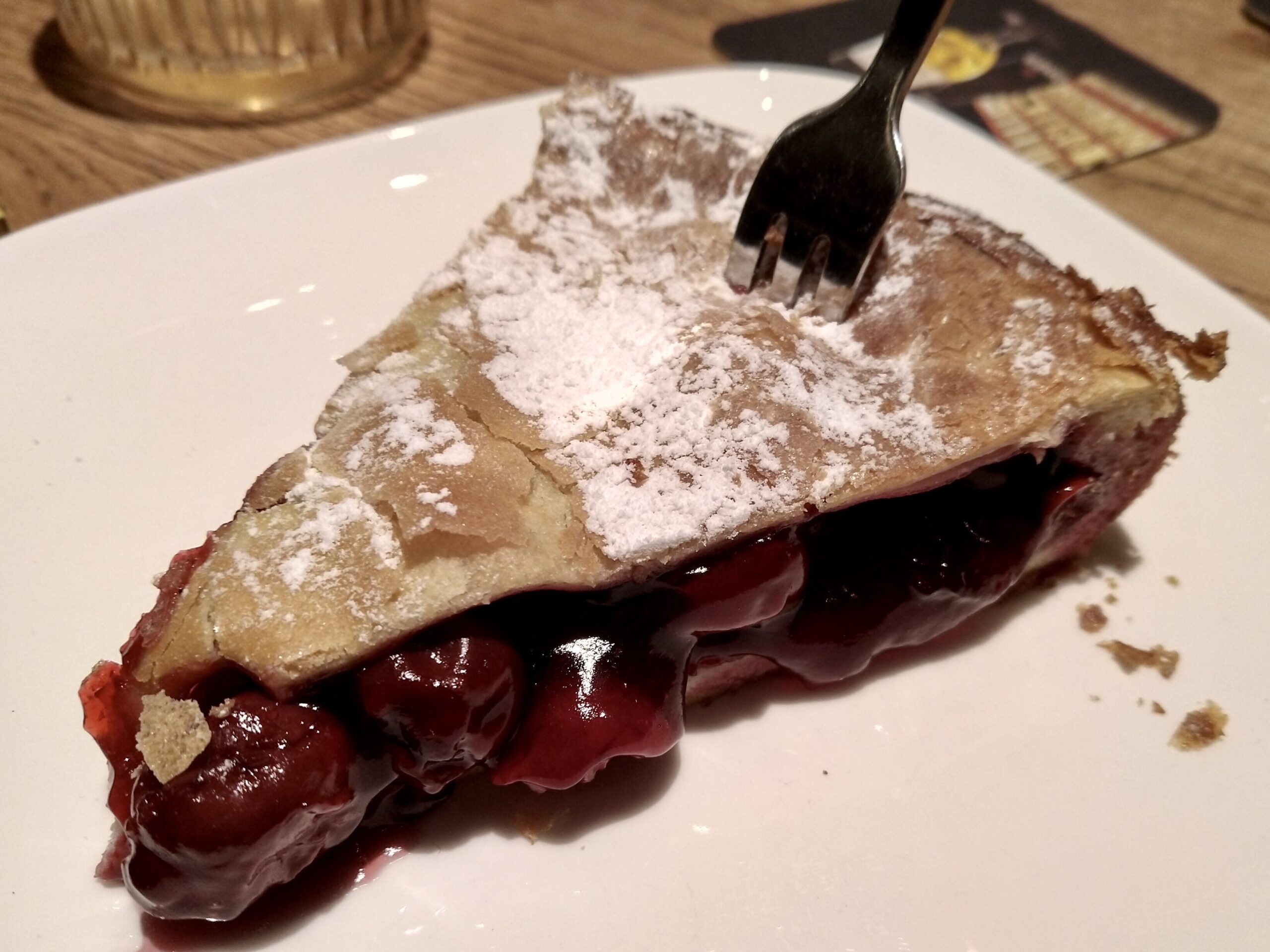
They are flat tarts made with a thin yeast-leavened dough crust and filled with fruit (fresh or preserved) or various kinds of sweet puddings. Some fillings can be topped with a crumble, a thin layer of dough or sweetened foamed eggwhites. Vlaai is recognised by high quality ingredients, simple and rich flavours. Depending on the baker, occasion and filling they can be more rustic or more refined, a lighter treat or very decadent. Whatever the style, they are served in generous pieces and quantities.
Vlaai is the pastry I grew up with and probably my ultimate pride when it comes to food. There is skill in the baking, a skill that is in the hands more than in the recipe. Quantities are not precise and a lot is done “with the holy eye”. What I love about these tarts is that I need all my senses to make and eat them. I can lose myself in baking vlaai. My hands, nose, eyes, ears, they are all busy.
Vlaai to me is like pasta to Italians, a conversation topic, different in every village and family, and a matter of regional pride. Even if vlaai knows many different varieties, there are some things vlaaiwise that could be considered sacrilege:
- Calling it cake or pie (that is “taart” in Dutch): vlaai is not taart. Like English “cake”, French “gâteau” and German “Torte”, taart has tiers and sponge and whipped cream. Which leads me to:
- Vlaai is not eaten with whipped cream, even if for tourists, or in other parts of the Netherlands, it is often decorated and served like that. Having whipped cream with Limburgish vlaai is like having ketchup with Italian pasta, spoiling it.
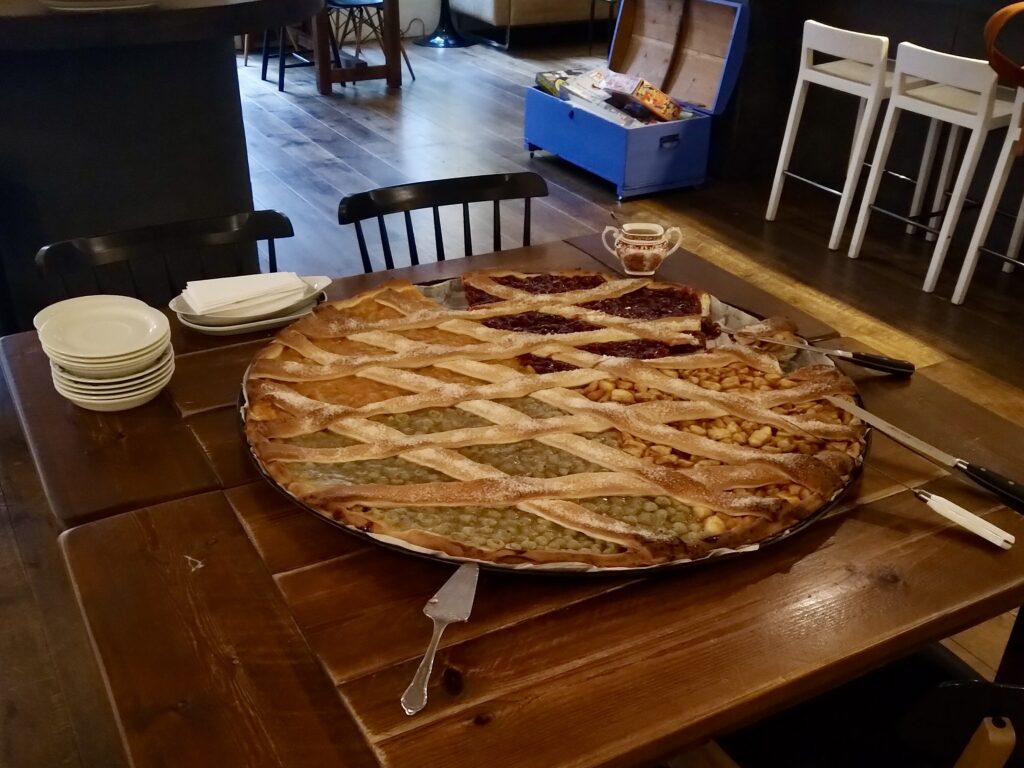
- Offering it in small portions. Pieces are generous and one vlaai, 28-30 cm in diameter, is divided into eight to a maximum of twelve pieces. Counting on a minimum of 2-3 servings per person.
Are these adagios ever crossed? Yes, of course. As some (many?) Italians every now and again order a cappuccino after 11am. At the same time, generally, this is not considered the best (or even “right”) way to enjoy it.
Recently, Limburgish vlaai was granted a Protected Geographical Indication (PGI) in the European Union after a plea from bakers in the combined Belgian and Dutch provinces of Limburg. This event was announced in the Dutch state journal with the following definition: “vlaai is a flat cake [taart]…”, showing, ironically, the need for some recognition of what vlaai is and is not. But what defines a pastry that has such a long history, so many varieties and variables and is never the same?
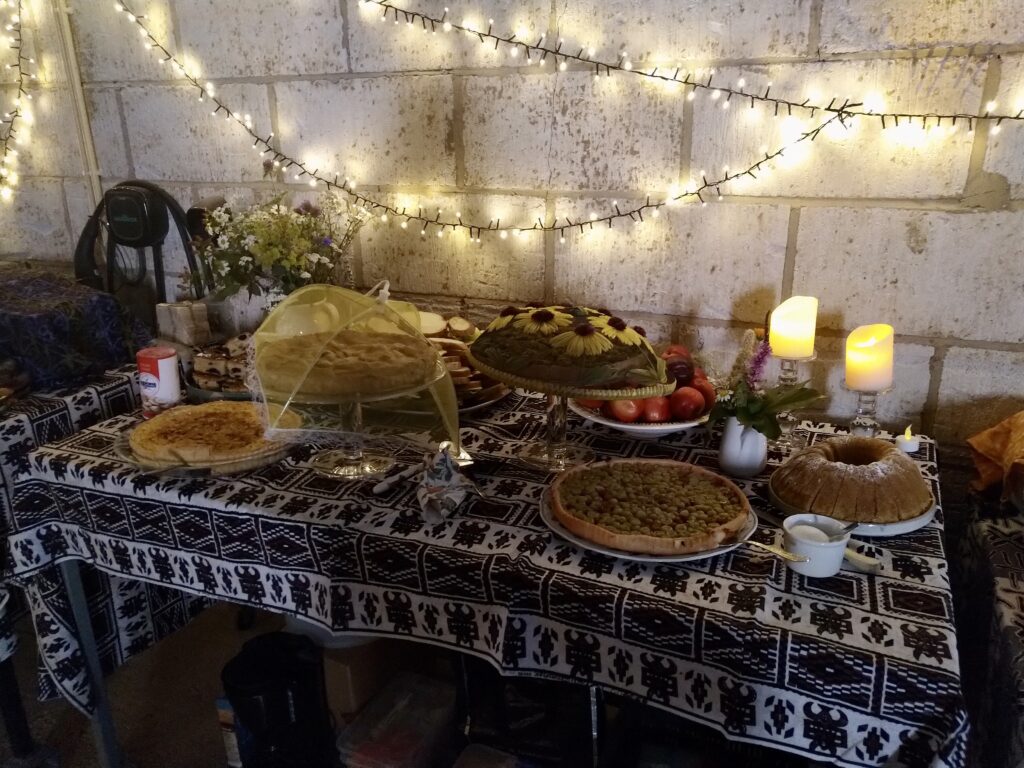
According to the new requirements, my family’s own homemade vlaai is not allowed to be called Limburgish anymore, as we often make it outside of the region (living elsewhere) and the quantities for the dough, handed down from my grandmother, do not meet the minimum fat ratio. My family, if they are even aware, laugh about it (“who cares”) and in my opinion it is still the best vlaai in the world (recipe will follow soon). And yet, it leaves the question, what makes a Limburgish vlaai authentic, or what makes anything authentic for that matter? And also, with times and needs changing, how to continue this tradition?
Can a Limburgish vlaai made with a simple fig filling still be called traditional, even if it would be an uncommon fruit to use? And what about one filled with rice pudding made with a plant-based milk, substantially changing its structure and taste? Is it important to even worry about such matters?
To come closer to answers (or perhaps to different questions), I will tell you a bit more about vlaai and the nature of its tradition in the next part of this miniseries.