
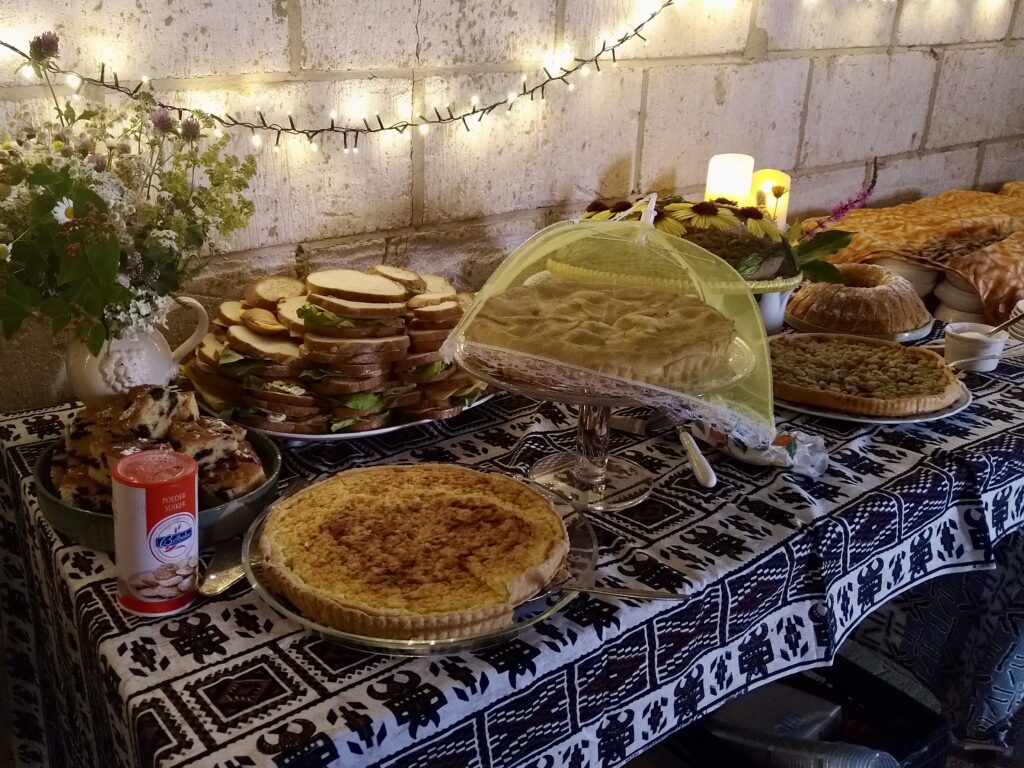
Continuing a tradition is a process. The tradition continues from generation to generation, evolving organically with the changing environmental and social circumstances. On an individual level, taking over a tradition from the generation before, is also a personal journey towards autonomy, not just evolving but created within circumstances, situations and desires, created while growing older.
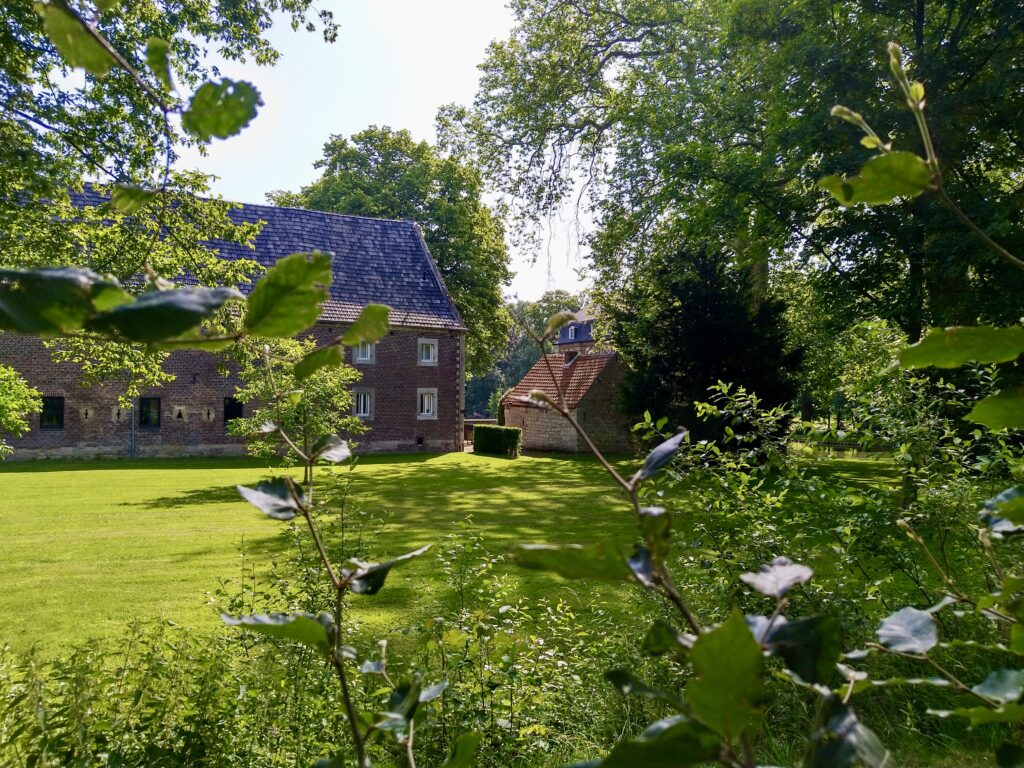
My grandmother switched from baking with butter to margarine (big Dutch margarine industry at the time, first beginnings of Unilever), then back to butter. My mother started using moulds with loose bottoms that were also larger and deeper so that it changed her vlaai.
Baking vlaai myself, I started out imitating, as much as possible, my mother’s and grandmother’s vlaai. Growing older, I learned that all of my mother’s siblings have their own version of my grandmother’s vlaai and I decided that I might as well add my own, the way I like it. And so I stick by the “thin crust-much filling” philosophy, by cinnamon in rice pudding, but I add less crumble on the custard than my mother does and I don’t see the point of loose-bottomed tins.
Making my own choices while continuing in my mother’s and grandmother’s footsteps, reminds me of a story I once heard about Carlos Kleiber, one of the most influential classical conductors of the 20th century. Interpreting a Beethoven symphony, he would omit the original pause between different parts of the symphony. Doing so, he adapted the symphony to modern ears—much more accustomed to certain (“dissonant”) note sequences—aiming to achieve the same surprise effect for the audience. The pause was lost, but the spirit was continued.
Like Carlos Kleiber conducting a Beethoven symphony, I believe, more than the technical aspects, there is a spirit to vlaai that I aim to stick by. It comes with the aromas of the ingredients: flour, butter, milk, yeast, but it also comes with the way I felt when I was young. When my (great) aunts and uncles all came together after church, elegantly dressed up ladies and gentlemen: skirts, blouses, suits, brushed shoes. Some aunts wearing their African fabrics, clothes they had had made in Zambia or Ghana. Happy chatting and chiming cups and saucers. Playing games with my cousins, helping with the dishes while singing in polyphony. The green hills, farmed by my uncles, all around. And all fuelled by a big table full of bread rolls, then vlaai, then soup, then quiche, salads etc. etc.
Sometimes I miss being small, like I sometimes miss the generation of my grandparents who have all passed. At the same time, I love that it is now my position to welcome people into my home and take care of them, do it my way, that I can bring myself to it, rather than just observe. Circumstances are different now: family sizes have changed, the role of the church has changed, the landscape has changed. And yet, the spirit of coming together, of laughter and music, of art and nature, of love and generosity, it is that same spirit that I still feel when I bake vlaai to serve and feed people.
I bring it out by aiming for high quality ingredients (as much as they are available and affordable to me), by using what I have, by measuring by sight and intuition (“according to the holy eye”). I evoke the elegance with a thin crust and a rich yet simple filling. I try to nourish people by finding the right balance between comforting creamy puddings and refreshing fruits, by making sure there is always enough food.
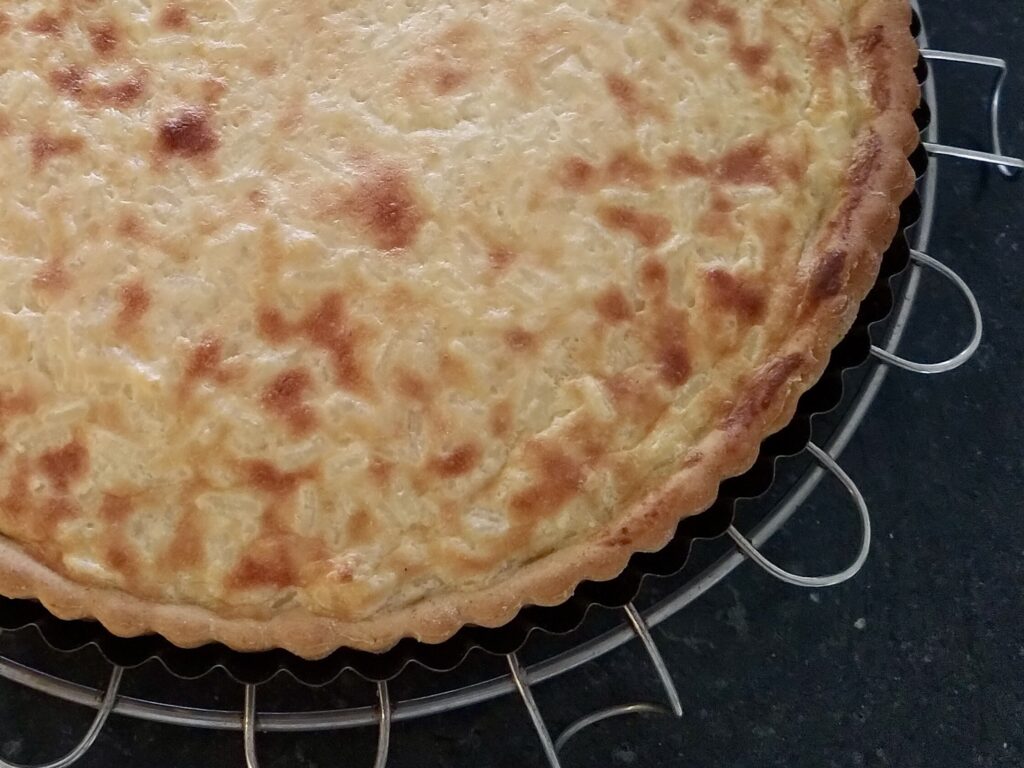
Baking vlaai takes over my kitchen: dough rising on the counter top, a floured work surface to roll it out. Pudding on the stove, rinsed fruit in the sink. In order to bake the best vlaai, I let go of precise measurements and trust my senses: follow the process and keep paying attention to what the dough or filling requires. Does the dough still stick too much: a little extra flour. Are the cherries not as firm: a little extra potato starch to prevent a soggy bottom. Are the gooseberries more sour than usual: a little extra sugar.
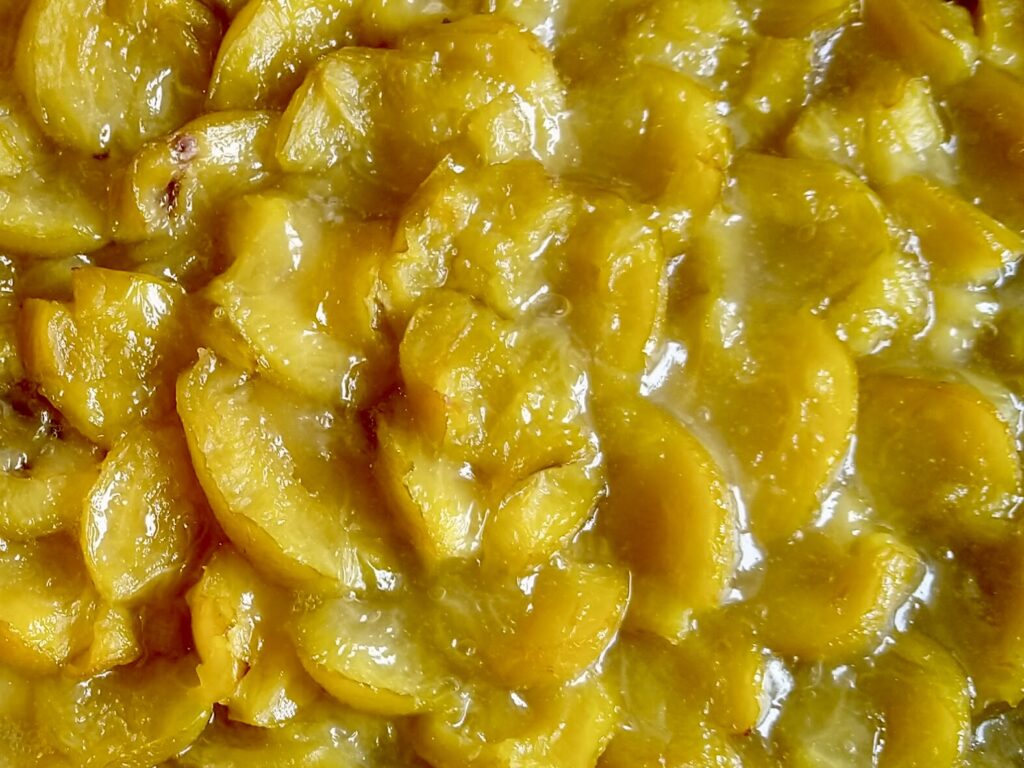
The eating too is all about the senses: first the eyes, the golden browning on top of a rice filling, the glistening of the creamy pudding inside, the vibrant colours of the fruits, twinkling in the light. Then tasting the different textures: the firm yet moist bottom, the crispy crust, sweet soft fruits, delicate pudding, crunchy crumbles.
And so, I hope to share this pleasure with you too and that you will join me baking vlaai in the next part.
Stay well, bring an appetite.
Wonderful to personalize the tradition
Thank you, I’m very happy to hear that.